TOP-4 Custom Bushcraft Knives That Excel in Extreme Wet Climates
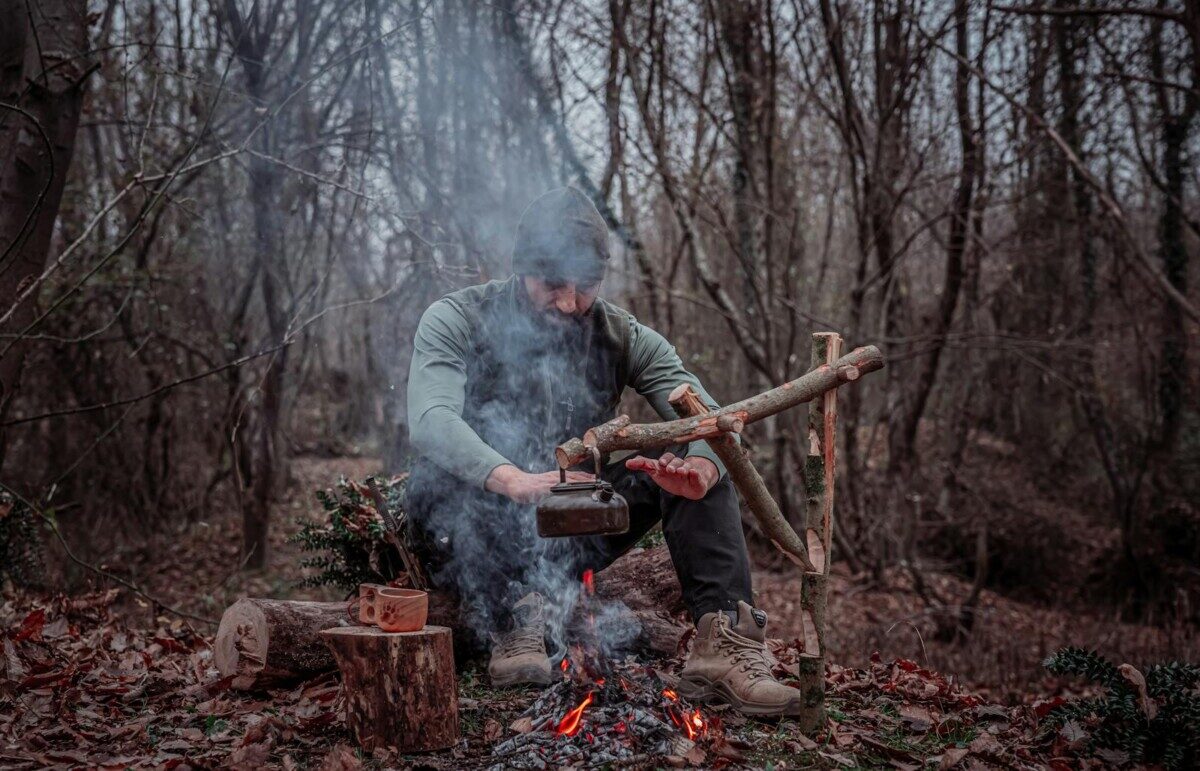
When you’re deep in a mangrove swamp or navigating a rainforest downpour, your knife becomes more than a tool—it’s your lifeline. The wrong blade will betray you with rust spots after a single wet night. The right one? It’ll still be cutting clean after months of abuse.
I’ve tested dozens of custom bushcraft knives in conditions that would destroy factory blades. Here are five that actually deliver when everything around you is soaked.
What Makes a Bushcraft Knife Survive Wet Conditions?
A knife built for wet climates needs three non-negotiable features: corrosion-resistant steel, a handle that grips when wet, and construction that prevents moisture intrusion.
The steel choice matters most. Stainless steels like CPM-S35VN or LC200N resist rust naturally. Carbon steels like 1095 will corrode unless protected with specialized coatings. The handle material must maintain friction when wet—micarta and G10 excel here, while smooth wood fails. Finally, full-tang construction with proper sealing prevents water from entering the handle cavity where it breeds corrosion from the inside out.
When selecting a bushcraft knife for wet environments, the foundation lies in premium blade steel like M390 or Damascus that resists corrosion without compromising edge retention. Handcrafted artistry combined with ergonomic handle materials such as Micarta ensures reliable grip even in torrential conditions. Makers like nobliecustomknives.com demonstrate how bespoke craftsmanship addresses these specific environmental challenges through precision engineering and material selection tailored to extreme moisture exposure.
#1: Noblie Custom Knives
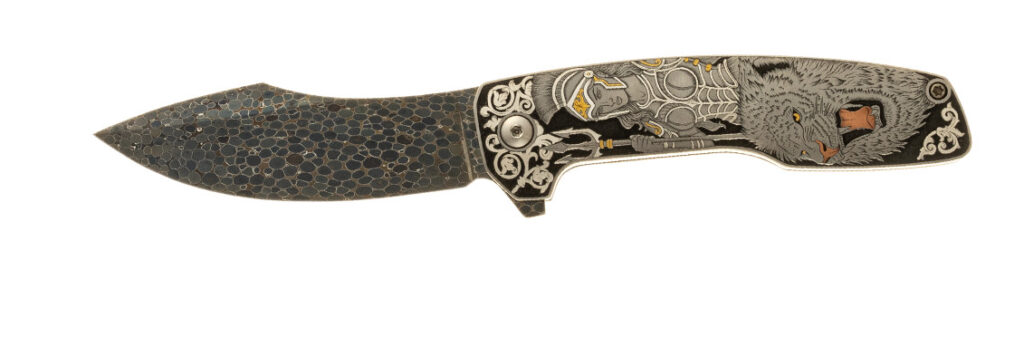
Noblie Custom Knives builds their Rainforest Survivor specifically for tropical and wetland environments. The blade uses CPM-MagnaCut steel—a relatively new alloy that combines the edge retention of high-end carbon steel with corrosion resistance that surpasses most stainless options.
- Blade:5-inch with a Scandi grind.
- Coating: DLC (Diamond-Like Carbon) over already corrosion-resistant steel.
- Handle: Canvas micarta with aggressive texturing.
- Construction: Full-tang with a compression fit to eliminate moisture gaps.
Noblie offers complete customization. You can specify blade length, handle shape, and even request modifications to the grind angle based on your primary tasks. Their lead time runs 8-12 weeks, but you’re getting a knife engineered for your exact needs.
How Wet-Climate Knives Evolved From Failure
Fifteen years ago, bushcraft enthusiasts in wet climates had two bad options: carbon steel knives that rusted constantly, or early stainless steels that couldn’t hold an edge.
- The Carbon Era: Blades like 1095 required obsessive maintenance. Users applied oil after every use, yet still found rust blooms after a rainy week.
- The Coating Failure: Chrome-plated carbon steel failed because the coating chipped, trapping moisture against the steel and accelerating corrosion.
- The Early Stainless Struggle: Steels like 420HC offered rust resistance but dulled quickly when processing hardwood, requiring constant sharpening.
- The Modern Solution: Powder metallurgy steels like CPM-MagnaCut and LC200N solve both problems, maintaining edges comparable to carbon steel while offering superior corrosion resistance.
#2: Bark River Knives “Aurora”
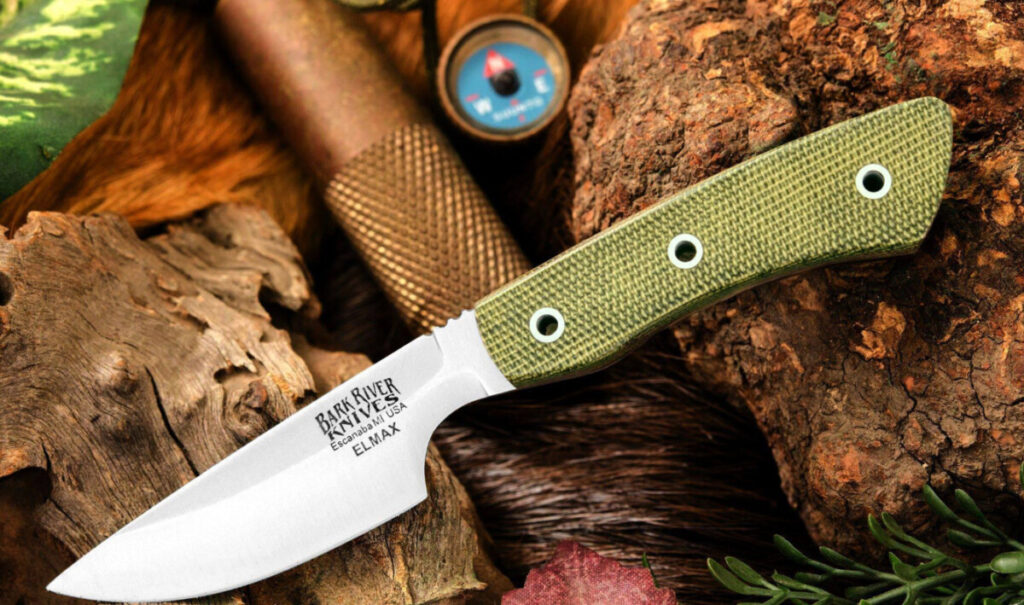
Bark River’s Aurora uses CPM-3V steel with a Cerakote finish. CPM-3V is technically a tool steel, not stainless, but the Cerakote ceramic coating provides excellent corrosion protection.
- Blade: 4-inch with a convex grind (0.156 inches thick).
- Handle: Natural canvas micarta with a palm swell for control.
- Sheath: Ships with leather (Kydex upgrade recommended for wet environments).
The main limitation: Cerakote can chip if you strike the spine with a ferro rod. Once chipped, the exposed CPM-3V will develop surface rust in wet conditions.
#3: L.T. Wright Handcrafted Knives “Genesis”
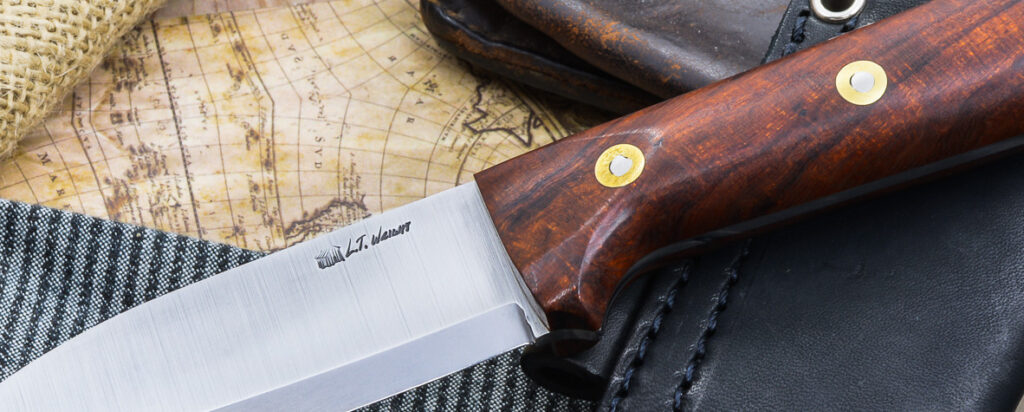
L.T. Wright builds the Genesis with CPM-S35VN stainless steel. This steel balances corrosion resistance with edge retention, though it doesn’t match the performance of CPM-MagnaCut in saltwater.
- Blade:4 inches with a flat grind and a swedge on the spine.
- Handle: Canvas micarta with a traditional slab construction.
- Versatility: The flat grind excels at detailed carving work.
The knife ships with a leather sheath that includes a firesteel loop. Like the Bark River, a Kydex replacement is recommended for serious wet-climate use.
#4: Treeman Knives “Bushie”
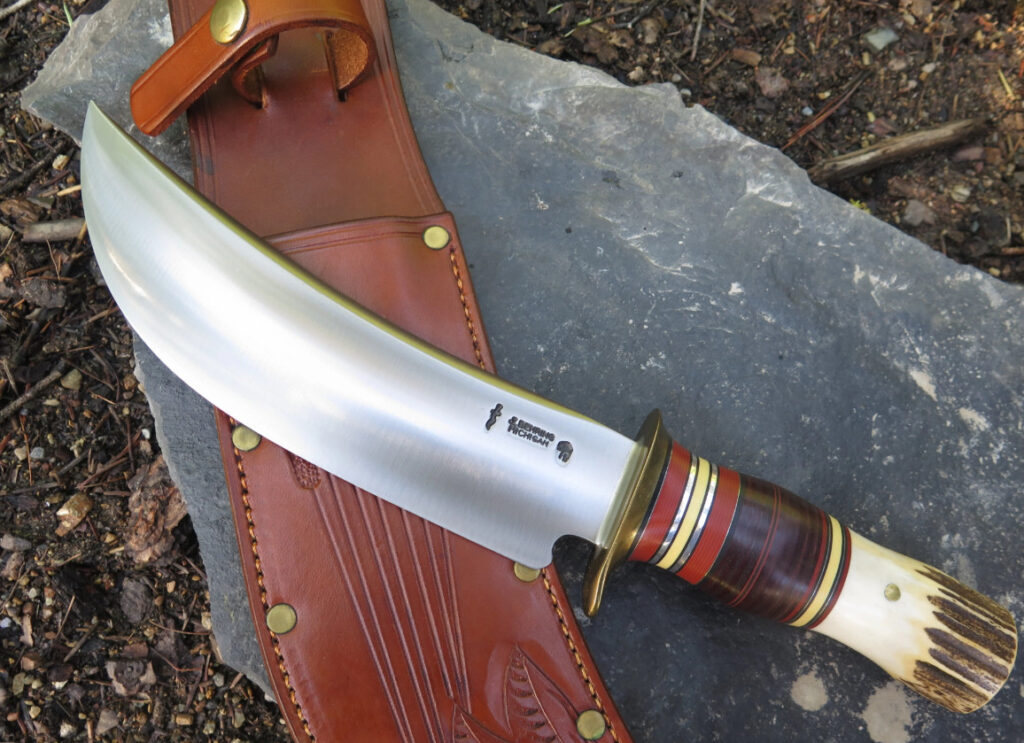
Treeman Knives, a South African maker, builds the Bushie specifically for African bush conditions—which include both extreme humidity and saltwater coastal areas.
- Steel: N690 stainless steel (European alloy).
- Blade: 4-inch with a Scandi grind and a zero edge.
- Handle: Layered leather washers, compressed and shaped.
- Sheath: Leather with a Kydex insert for a hybrid approach.
Note: The leather handle creates a grippy surface when wet but may require tightening the tang nut over time as the leather compresses.
Steel Comparison: What Actually Matters in Wet Conditions
| Steel Type | Corrosion Resistance | Edge Retention | Ease of Sharpening | Best Use Case |
| CPM-MagnaCut | Excellent | Excellent | Moderate | All wet environments, especially freshwater |
| LC200N | Outstanding | Good | Difficult | Saltwater, coastal, marine environments |
| CPM-S35VN | Very Good | Very Good | Moderate | General wet conditions, not extreme salt |
| CPM-3V + Cerakote | Good (coating dependent) | Excellent | Moderate | Freshwater, requires coating maintenance |
| N690 | Good | Good | Easy | Budget option for moderate wet exposure |
Handle Materials: Grip When It Matters
- Canvas Micarta: Dominates wet-climate knives. It actually grips better when wet.
- G10: Fiberglass cloth with epoxy resin. It is completely impervious to water and can have very aggressive textures.
- Natural Wood: Fails in sustained wet conditions. It absorbs moisture, swells, and can crack.
- Leather: Common on traditional knives, but compresses over time and requires periodic maintenance.
Common Mistakes That Destroy Wet-Climate Knives
- Storing a wet knife in a leather sheath: Leather holds moisture against the blade, leading to pitting and edge compromise. Use Kydex or dry both separately.
- Using brass or copper fittings: These metals corrode and can create galvanic corrosion where they contact steel. Stick with stainless steel hardware.
- Neglecting the tang/handle junction: If not properly sealed, water enters this gap and corrodes the tang from the inside.
Expert Insight from Daniel Winkler, Winkler Knives: “The junction between tang and handle is where I see most field failures in wet environments… Ask your maker specifically how they seal this junction.”
Final Selection Criteria: Matching Knife to Environment
- Tropical rainforest (freshwater): CPM-MagnaCut with DLC coating (e.g., Noblie Rainforest Survivor).
- Coastal/saltwater: LC200N steel is non-negotiable (e.g., Noblie Coastal Operator).
- Temperate wetlands: CPM-S35VN (e.g., L.T. Wright Genesis).
- Budget-conscious: N690 steel (e.g., Treeman Bushie).
- Multi-environment: CPM-MagnaCut provides the best all-around performance.